

As most European countries, Italy has its own graff-media history, that in our specific case dates back to the early 90’s, when seminal zines and magazines were first released by early enthusiasts.
Reconstruct the precise history of this wave that little by little turned into something like a huge tsunami over years, is not easy or, maybe better, impossible, due to the underground nature of a huge percentage of the subjects we are talking about and of the debatable nature of the phenomenon itself. Therefore what i’ll try to roughly sketch is a very short history of the phenomenon, trying then to cherry peek a few publishers and editions that in recent years are publishing the most interesting things in my humble collector’s opinion.
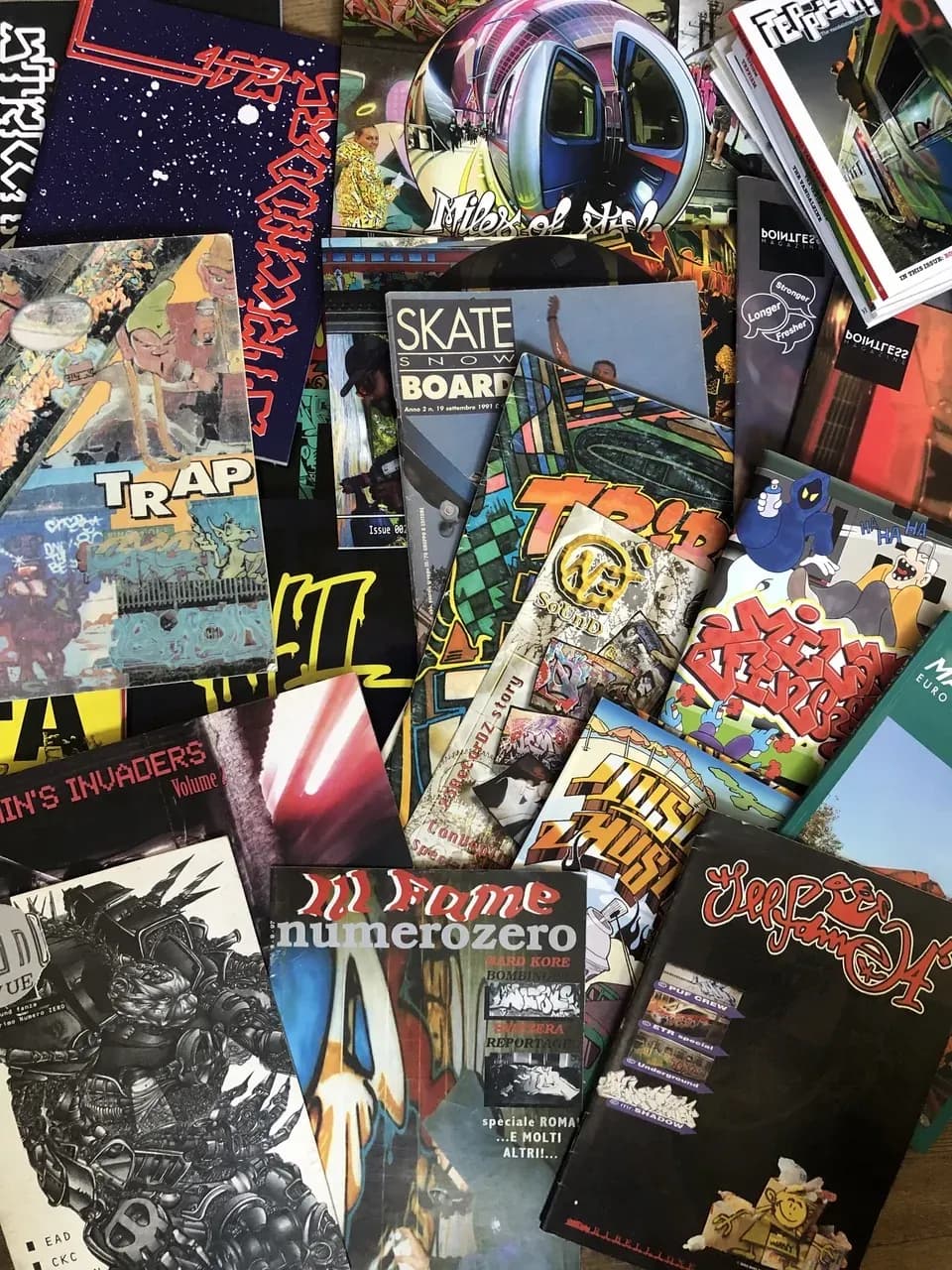
As said before, everything started in the early 90’s here, editions-wise: in spite of the fact the the very first graffiti writers started painting around ’84 inspired by the huge European break dance wave (see ShaOne - Remixed Media 1980 - 2020, Showdesk 2023, ISBN: 979-1281375031) and the first ever publication “with some” graffiti photos being a contemporary art show’s catalogue (Arte di Frontiera New York graffiti da un progetto di Francesca Alinovi, Mazzotta 1984, ISBN-13:978-8820205553), it’s only in the early 90’s that the scene was mature enough to start producing its own medias such as Alleanza Latina (Genova 1991) that in few years became an hip hop magazine distributed in newsagents, Tribe (Milano) and Trap (Milano/Treviso).
Quite likely other smaller self-published projects has been printed, like the xeroxed b/w “Cazzo” zine by Pongo CKC (Milan area, 1992), but there is very few information about them and it’s then very difficult to even attempt without making annoying mistakes.
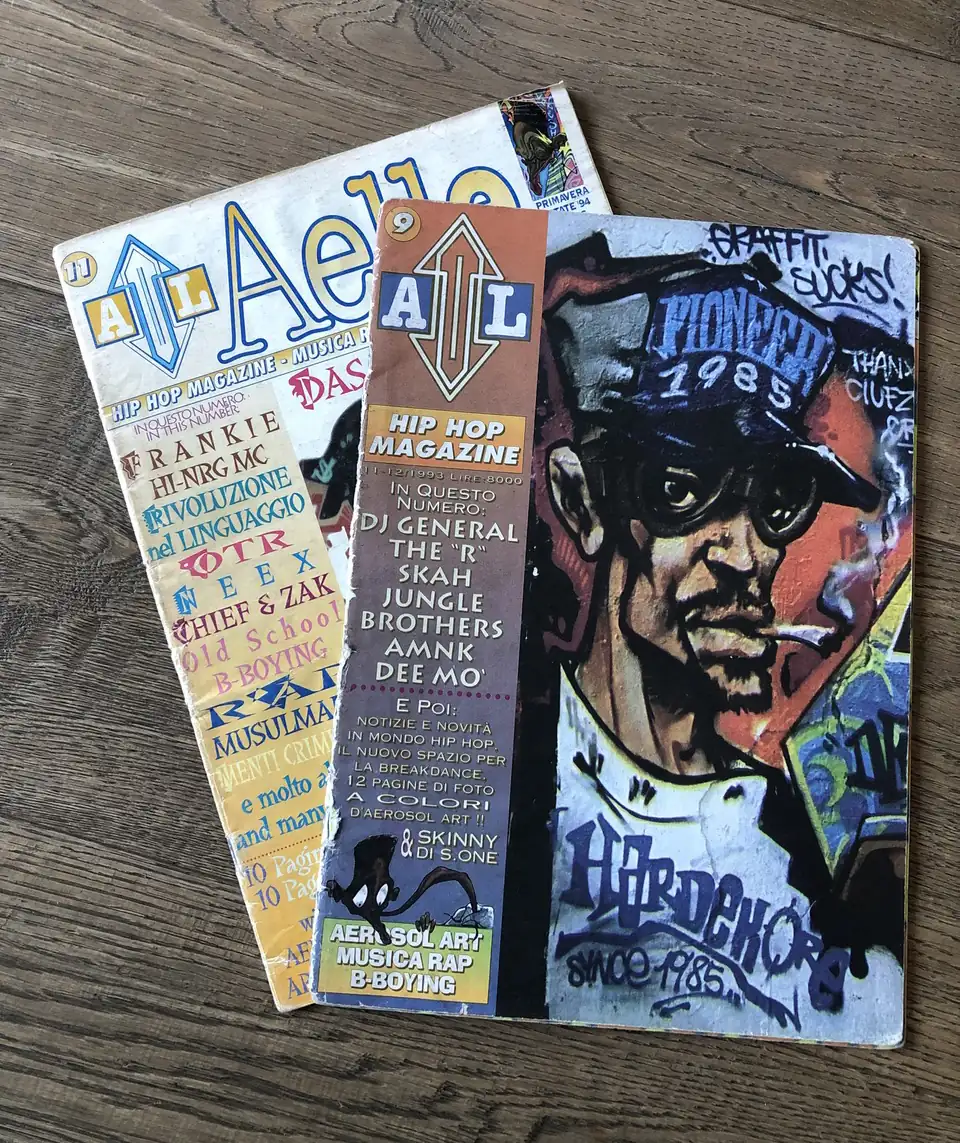
Therefore, it’s in the early 90s that the Italian scene starts to promote itself through self published zines but mostly mags, the majority of which lasted for just a few issues, while Aelle made it for 53 (with the last one published in 2001, already 24 years ago), facing changes over years and seeing the graffiti-related content decrease in favor of more popular ones, such as rap music and hip hop culture in general.
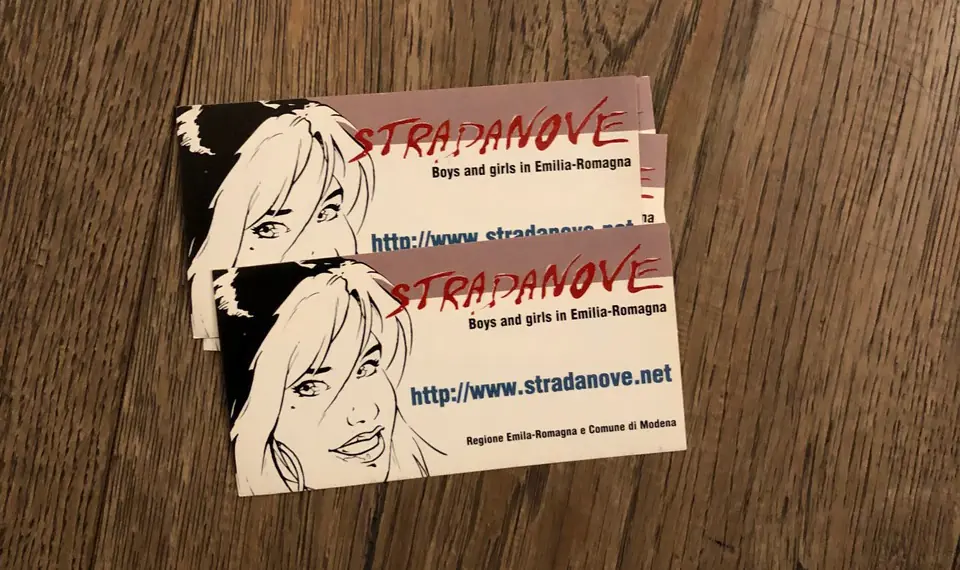
Among the earliest Italian graffiti websites, we can name stradanove.net (Modena, 1997) and invisible.uni.cc (Umbria, early 2000’s), while Bombers Board (Milan area, early 2000) represented a seminal example of social media exclusively dedicated to graffiti.
Anyway, since then on, the amount of publications almost grew exponentially in spite of the dawn of the internet that didn’t kill the printed matter, but for sure established an even more democratic and cheap way to distribute content, representing an alternative and parallel network of graffiti related medias.
Among the earliest Italian graffiti websites, we can name stradanove.net (Modena, 1997) and invisible.uni.cc (Umbria, early 2000’s), while Bombers Board (Milan area, early 2000) represented a seminal example of social media exclusively dedicated to graffiti. Speaking about the bombers board, its success at the time was related, as it happened for magazines too, to the credibility of the editors, that by chance, were the same behind the very first subway-only magazine (Subwaynet) and Garage Magazine that blended with incredible taste, the most interesting hardcore graffiti, post-graffiti street art, illustration, graphics and photography since issue number 4.
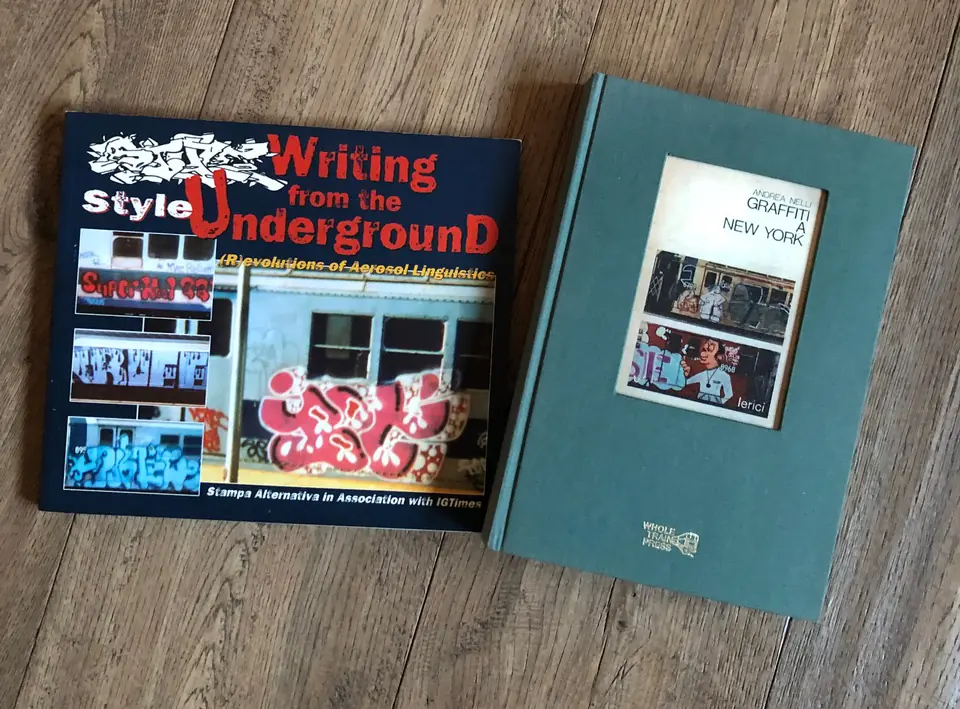
Back to our main topic, graff mags in Italy, after the first early wave, witnessed a blooming of titles from around ’96 on (when one of the most important italian graff books ever was released, Style: Writing from the Underground (Stampa Alternativa / IGTimes, 1996; ISBN-10: 8872263182, ISBN-13: 978-8872263181), a collaboration with Phase II who at the time lived between Bologna and Rimini) on more or less, with tens of different ones focusing on national and local scenes.
Some examples:
Magazines
First wave:
- Alleanza Latina (1991, Genova)
- Tribe (1991)
- Trap
- Impatto Nitro (1991, Milano)
Second wave:
- Sudcoast
- Wreckage (Ancona, late 90’s)
- Yards on fire (2009)
- Style Busters (2005)
- Spray Assault (1997, Bologna)
- Pressure (2000, Bologna)
- Juice (1997)
- Isi Strozzine (1996)
- Adrenalin
- Aerosol Condom (late 90’s)
- FS Report (4 issues)
- 10.000 maniacs (3 issues)
- Arcano Revue (1996, Venezia)
- Garage Magazine (Pavia)
- Onè Sound (1997)
- Paper Experience
- Biz
- Bagnacaoda
- Ill Fame (1997, Brindisi)
- Collage (Crema, 1996)
- Gotaste (Palermo, 2001, 5 issues)
- Hateful (Rome)
- Maccaroni (1996, Rome)
- Hateful (Rome, 2 issues)
- We are the city (Rome)
- Welcome to the jungle! (Rome)
- One step beyond (Rome)
- Italy’s most wanted
- Defrag
- 081 (Napoli, 1997)
- Lettering
- Casseurs
- Taking Over
- First Class
- Killcolors
- Garage Magazine
- Subwaynet (Subways only)
- Egowar (Subways only)
- Night Warriors (Subways only)
Today:
- Arcano2
- Cover all
- Infa
- Dopetrains
- Spraytrains
- Tuscany Hustlers
- FiPiLi
- Milano Finest
- That’s amore
- Ill fame reloaded
- Ride the beast
- Stricchiddas
- Teppism!
- Rusty pleasure
- Paranoise zine
- Morning Glory
- Mad about rails
- MTTC
- FADE
- Miles of styles
- Trains invaders
- Milano finest
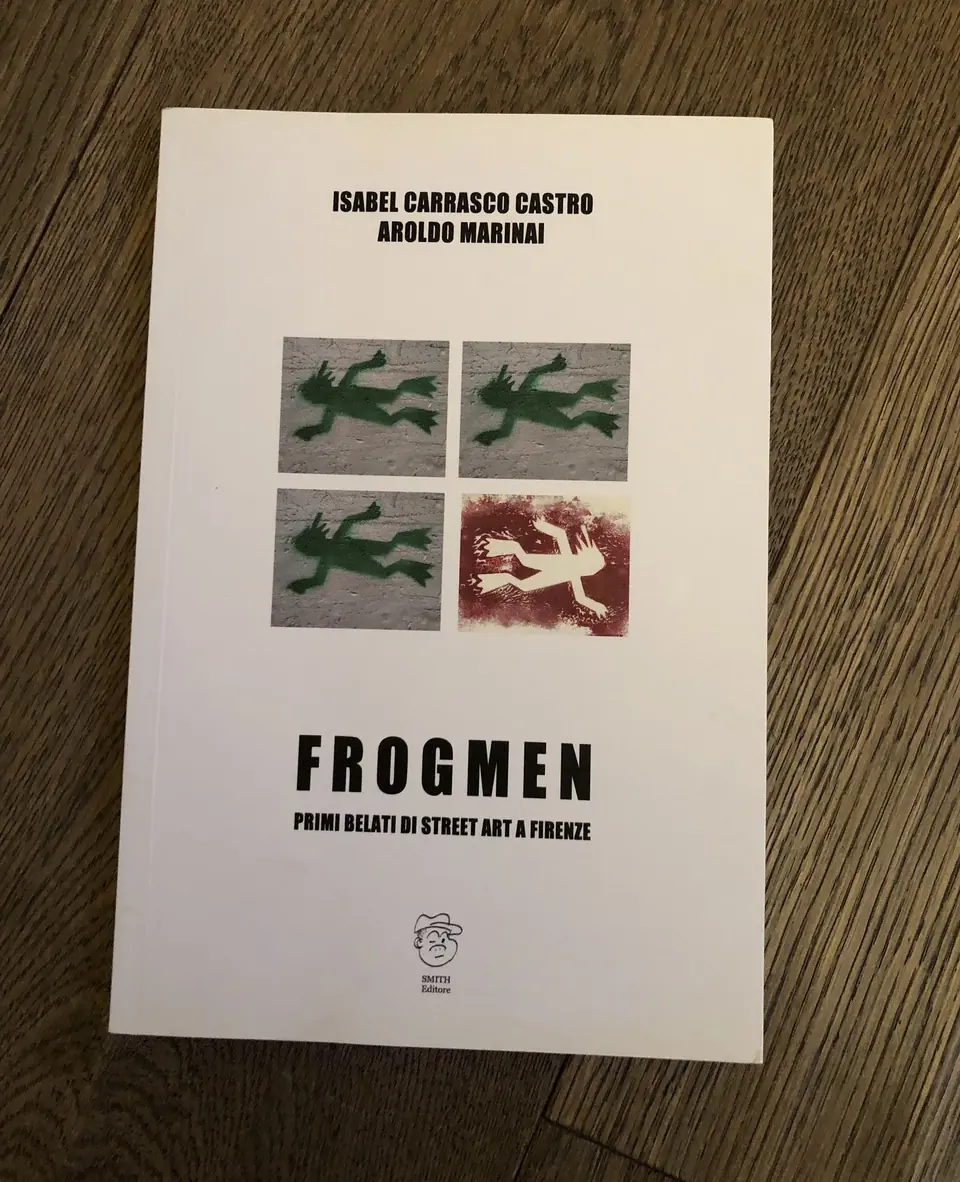
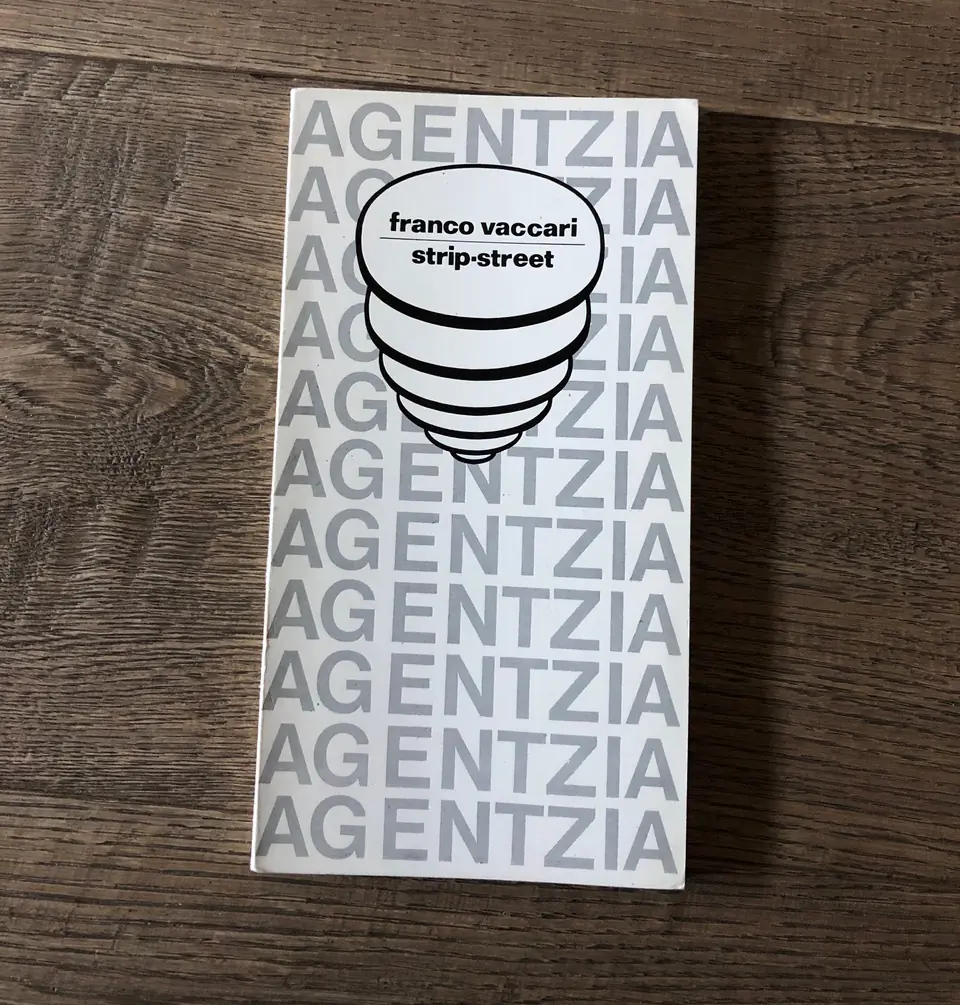
In trying to trace a rough story of the Italian printed matter graff related media, shouldn’t be avoided mentioning that, apart from Arte di Frontiera show catalogue, other seminal books with graffiti related content were published, and some “proto street art” ones too: among the letters, i can list Franco Vaccari’s photographic researches about public spaces illegal scribblings (Strip street and Le tracce), Frogmen and a number of books about political slogans.
Keeping the focus strictly on American style-writing, we saw Rammellzee’s show catalogue (The Equation, 1987), Fab 5 Freddy’s at Medusa Gallery show catalogue (1979) and last but not least, the most important, imho, Graffiti a New York by the artist Andrea Nelli (1976). My impression, based on many years now at close contact with the culture and the scene is that these publications had almost no impact on the development of the graffiti scene in comparison to, for example, the role of skateboard magazines where some really seminal examples of graffiti were published and that started to appear in newsagents in the late 80’s such as Skate & Snowboard, XXX and Skate.
That doesn’t mean these above mentioned books, now rare and extremely valuable objects, did not acquire a different meaning and value over time. The case is for example for Graffiti a New York - it’s not by chance probably, it was NOT a show’s catalogue but a first person and in depth analysis of the early days of graffiti through first hand interviews and experiences - that was also reprinted in 2014 by Wholetrain Press that, from 2012 on, strongly supported the train bombing scene releasing tens of monographs, magazines and books.