

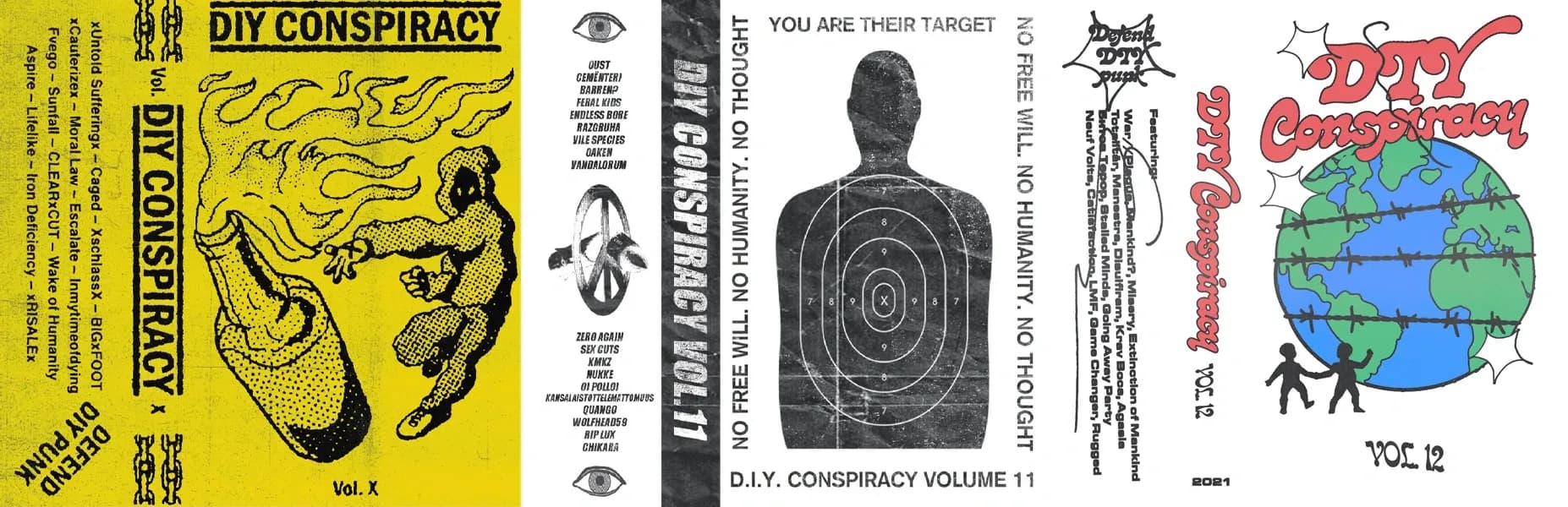
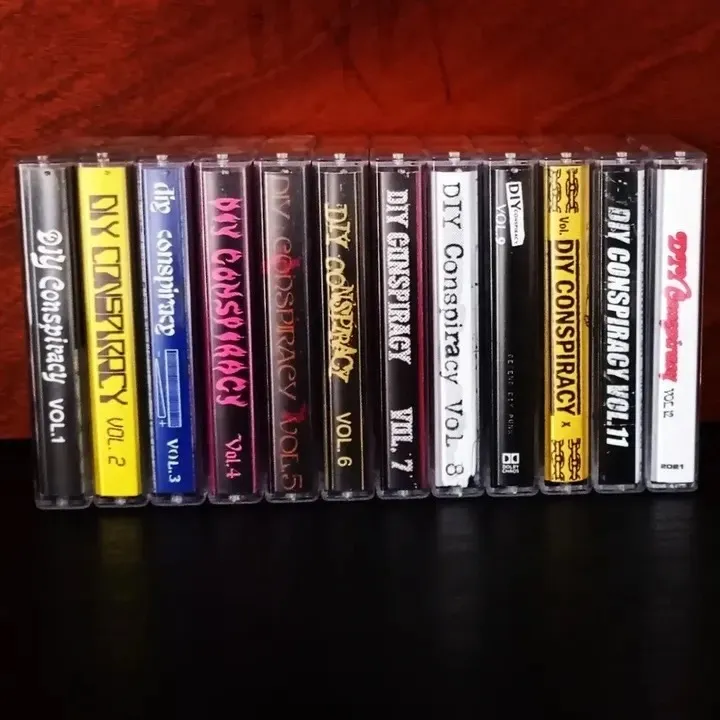
DIY Conspiracy has been one of those long-running projects that many people in the DIY punk world inevitably come across at some point, whether through interviews, reviews, or scene reports. Over time, it has grown into something that feels less like a single webzine and more like an ongoing archive of underground scenes across different places. Alongside that, initiatives like DIY Solidarity have added another layer to what the project does, moving beyond documentation into direct support. We’re really happy to have this conversation and hear more about how everything functions behind it!
Thank you so much for accepting this interview!
DIY Conspiracy has been active for many years now, covering a wide range of reviews, interviews, and scene-related writing. How did it all begin in the first place, and what were you reacting against, or trying to create, at that time?
Mittens XVX: DIY Conspiracy started around 2005 with me and a few other punk hardcore kids in Bulgaria, most of us either publishing print zines already or wanting to start one. The internet still felt really fun back then, so we wanted to create a website that could bring all that information together. News about records, bands, zines, regular punk record reviews, a download section, info about upcoming shows, and whatever else felt useful.
It was also the post-9/11 period during George W. Bush’s war in Iraq, and because the dollar had been devalued due to the war, it was suddenly relatively cheap and accessible for us to mail-order records and zines from the US. That’s when I started collecting copies of Profane Existence, Inside Front, and HeartattaCk. Those were the zines that inspired me the most, and I wanted to do interviews and record reviews with that same kind of musical and political direction.
There were other big inspirations too, including tons of non-English zines, and people like Lük Haas and Yann Boislève, who showed me that punk was truly international in spirit. In the beginning, the site was in Bulgarian, but then we noticed that a lot of the traffic was coming from abroad, with people reading it through translation tools. Angel then came up with the idea to redesign the site and switch it to English, with a more international focus. When we bought the domain diyconspiracy.net, after changing many different domains before that, it continued in English and has stayed that way ever since.
It turned out there was also an Italian punk label called DIY Conspiracy around the same time, though I think it hasn’t been active for a long while now. From the start, what we wanted was to show the international, global, DIY, anti-commercial, and maybe a bit more political side of the hardcore punk scene.
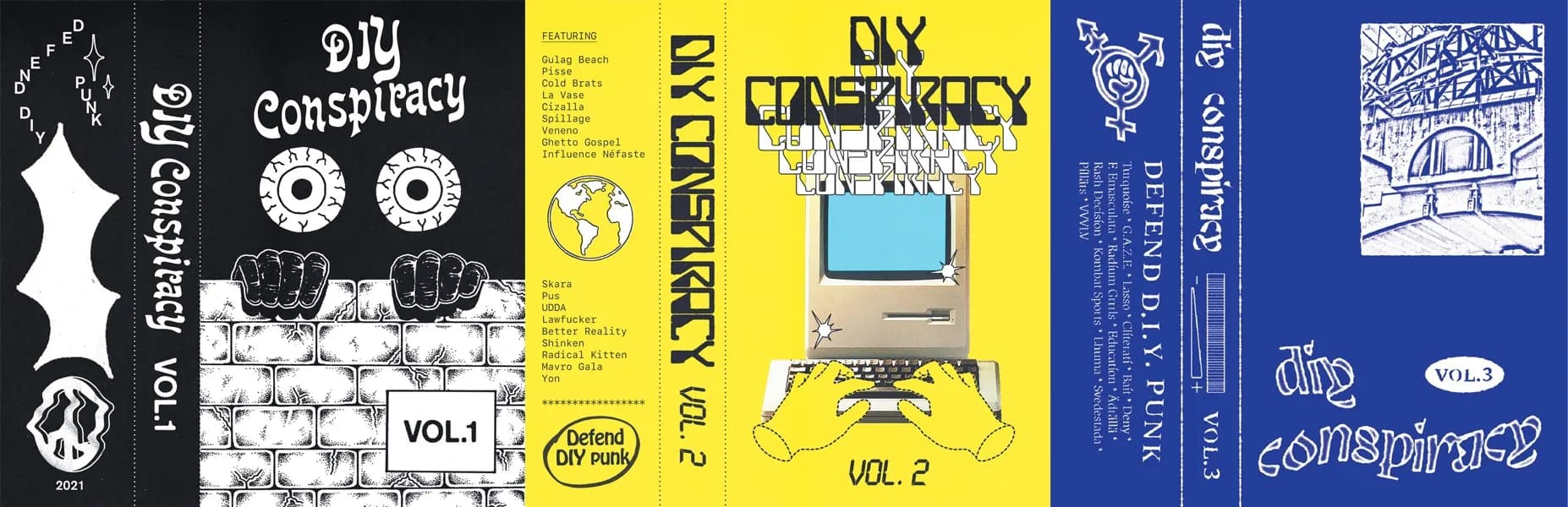
Looking at it today, DIY Conspiracy feels like more than just a webzine. It also works as an archive, a network, and a point of reference for different scenes. How do you personally define what it is now?
Mittens XVX: Yes, I think you’re right about that. We have writers and contributors who are musicians and play in some really good bands, but I’ve never been a musician myself, and I don’t understand music in that technical way. I was always more of a history nerd at school and university, so I think that comes through in my reviews and articles. I’m probably more of a historian or archivist type of person, and that side of DIY Conspiracy is really important to me.
Right now, I’m working on building indexes of all the articles on DIY Conspiracy, where people will be able to browse the site by band name, year of release, place of origin, and subgenre. To do that, we have to create custom taxonomies for all 1,500+ articles on the site, which takes a lot of time and effort. The plan is to have it finished by the end of 2026, and once that’s done, the site will really feel more like an archive where you could find all these bands, reviews, interviews, and scenes sorted by custom tags and taxonomies. We’re also building a punk glossary with explanations of some of those weird terms and subgenres people search for online.
With social media algorithms, AI slop everywhere, and the total enshittification of Google as a search engine, I think it’s really important to build these kinds of functions directly into the site. We also launched an old-fashioned forum, though it’s still a couple of people posting. DIY Conspiracy is more or less a regular webzine, but I also see it as an archive, a place to hear a lot of new punk music, and a way to collaborate with and uplift other DIY punk projects, whether they are doing similar things or something completely different.
What usually draws your attention to a band or project, what makes you decide about contents?
Mittens XVX: I think it’s fair to say every writer has their own bias. A while ago, we had a conversation with Rachel of The Dissidents, who also helps coordinate review assignments for Maximumrocknroll. Her point was that there aren’t many webzines left that write about all kinds of punk and new releases, good and bad, and are still willing to publish criticism or even bad reviews.
Most punk writers today seem to have their own platforms where they make curated lists and review the things they personally like. They often write about their friends’ bands or about records and genres they already enjoy, and there’s nothing wrong with that. Personally, I try to find a balance between both approaches. I write about things I’m naturally interested in, but I also try to cover records that fall outside my usual taste or comfort zone.
Sometimes I feel completely overwhelmed by the amount of new music coming out, and I don’t always have the motivation to write. But even then, I try to make the piece useful. Even if something isn’t exactly to your taste, you can still write a few words about the band’s history, describe the music in terms of its subgenre, emotional impact, recording quality, influences, and what the lyrics are about. And you don’t need to be a contrarian to include some criticism and personal opinion as well.
And as I mentioned earlier, HeartattaCk was one of my favorite zines, and I was really moved by Kent McClard’s policy of not reviewing records with UPC barcodes. A lot of people probably saw that as hardline or plain stupid, but I think his explanation makes a lot of sense. For him, it was an attempt to create a clear and objective line. A record either had a barcode or it didn’t, so the decision wasn’t based on personal taste, friendships, hype, or one person’s idea of what punk should be. It wasn’t perfect, and he never claimed every other punk zine had to follow the same rule, but the point was to protect hardcore as an accessible community.
Obviously, I can’t apply the exact same rule to DIY Conspiracy today, but I still think about that a lot. For example, I wouldn’t review a record that exists only on Spotify, although we do review plenty of records that are on Spotify as long as they’re also available on Bandcamp or other more accessible platforms. In general, I tend to focus on bands that either align with my politics, come from less privileged positions, or do something I find worth covering. I also don’t feel much need to prioritize bands, especially US bands with all cis-white-het members, that send out tons of press releases and are already being covered by every other website.
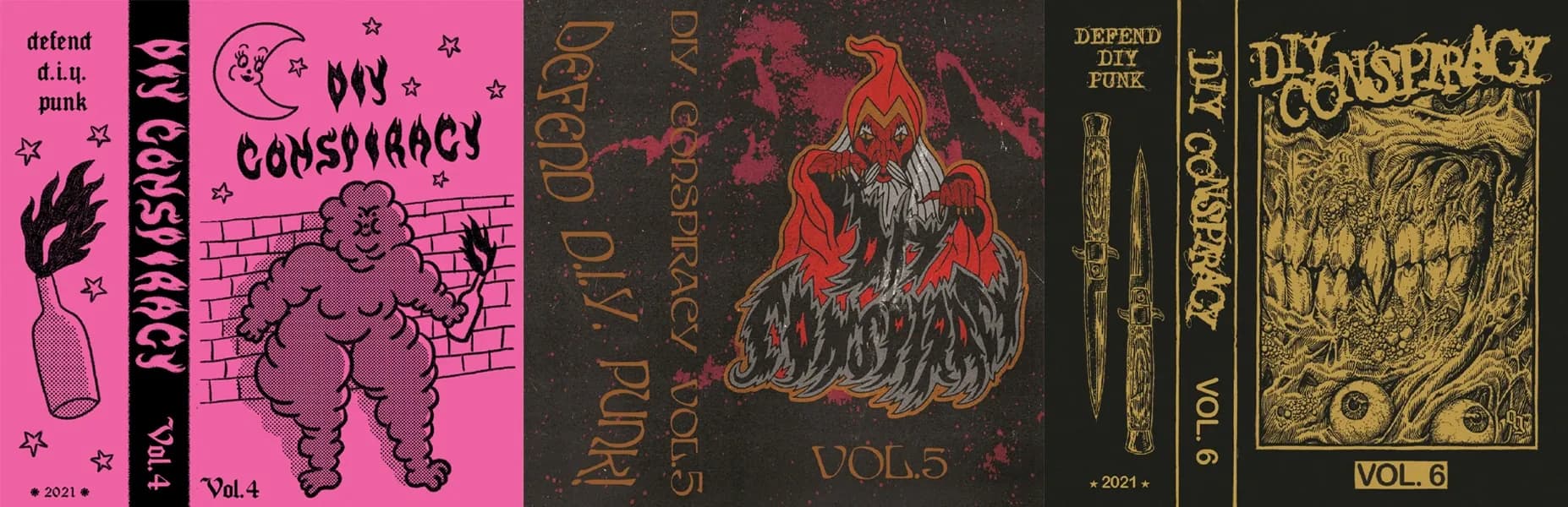
DIY media often exists somewhere between observation and participation. Do you see DIY Conspiracy as something that documents scenes from the outside, or something that is actively part of shaping them?
Mittens XVX: I really wish it could always be “for the punx, by the punx”, but it’s hard not to document something from the “outside” when you’re writing about a band from the other side of the world, or a band you’ve never seen live, with lyrics in a language you have to translate through online tools.
For me, the solution is to have more writers from different continents and places, people who root for their home teams and can write from a more local perspective. At the same time, we’ve been among the first to write about demos and debut releases from bands that later signed to bigger labels and became much more popular. I don’t think it’s bad when a journalist or an “outsider” writes about an underground band or discovers that active DIY punk scenes exist in places they might consider “exotic”, but for us, writing about those scenes is not something extraordinary or unusual. It’s one of the main goals of DIY Conspiracy, to provide a platform for less represented scenes.
When it comes to shaping them, I think we’ve done that in smaller but consistent ways. We’ve been boycotting Spotify for many years, long before their CEO’s investments in AI and military tech became a wider discussion, and now we’re actively pushing for Bandcamp alternatives and ways people consume music and “content” today. I also think people respect DIY Conspiracy because we try to write useful reviews and publish thoughtful articles and interviews that leave people more knowledgeable than before.
And of course, there are many other great people and projects doing the work, like The Counterforce with their website, Fediverse server, and #AllPunksLeaveMeta campaign; the Ask A Punk calendar listings spreading across the world; the DoDIY.org website; or It’s All About Punk Show, which is an amazing radio show. So I see DIY Conspiracy as both documentation and participation. We’re observing, archiving, and writing about things, but we’re also part of the wider network trying to keep DIY punk visible, connected, and active outside the usual corporate platforms.
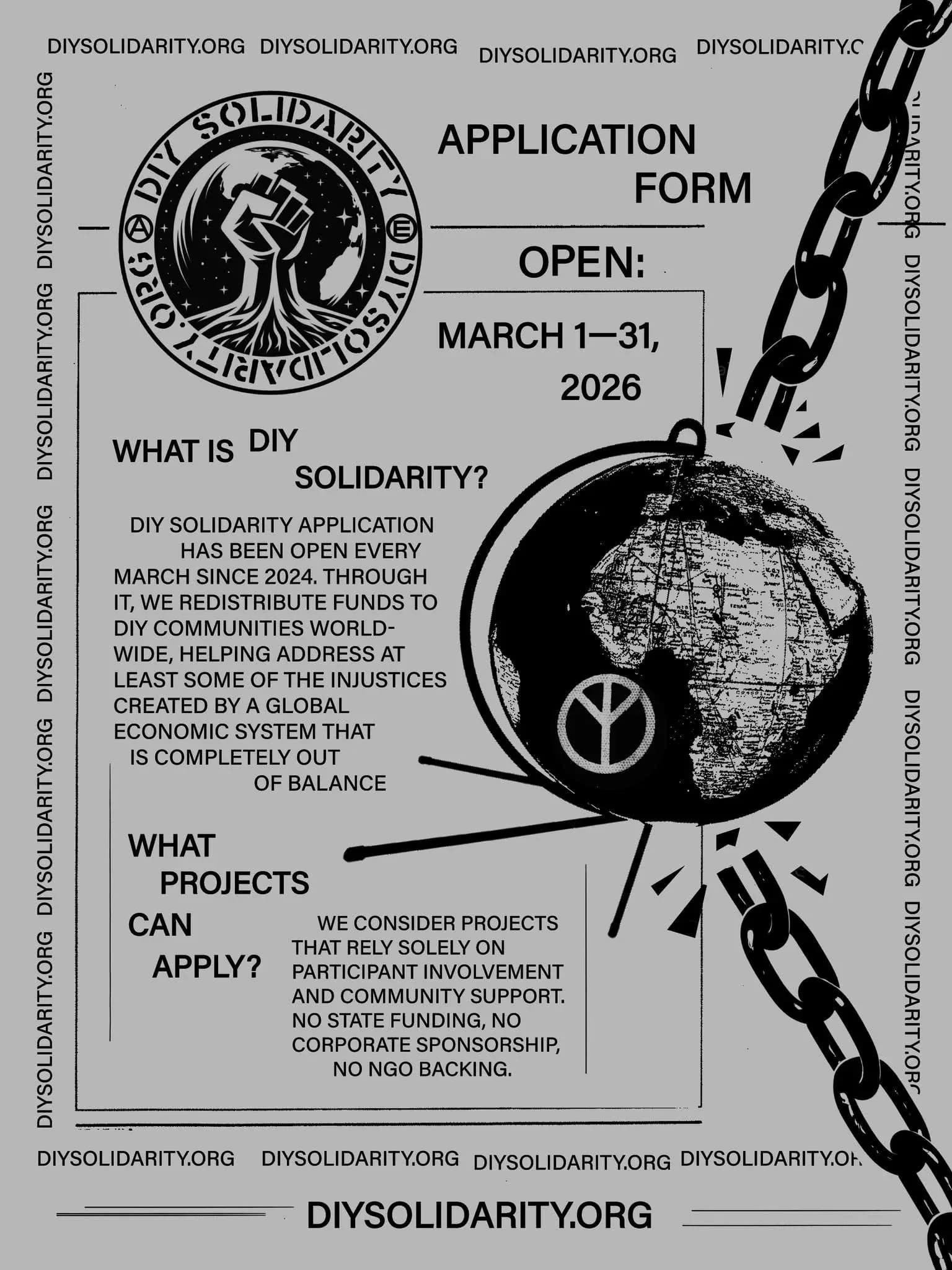
DIY Solidarity adds another dimension to the project by redistributing small grants to DIY initiatives. How did the idea for this come about, and what gap were you trying to address within DIY culture?
GK (active in DIY Solidarity): The idea came from a friend with a strong punk background who inherited money he wanted to share. DIY Conspiracy seemed like a great platform to get a relevant project off the ground, and with the makers being friends we reached out to them. Luckily, they were enthusiastic about the idea, and we discussed different ways of doing this and felt that a focus on distributing funds from the global north to the global south was really important. The global injustices created by capitalism and imperialism (which will always be intertwined) are enormous, and they are also reflected in our scenes. We know fully well that we cannot rectify this with DIY Solidarity, but we hope that we can make a little difference through concrete, material support, and also raise awareness about global injustices. In the long run, only entirely different political and economic systems and social relationships can bring fundamental change.
How does DIY Solidarity work in practice when it comes to selecting and supporting projects? What principles guide those decisions, especially in a DIY context where resources are limited?
GK: We’re a small collective but each member is well connected internationally. Before we make decisions on how to distribute the funds at our disposal we consult with people who are familiar with the projects that apply, or at least with the places and cultures they are situated in. Our main guidelines are a focus on the global south, a strong community aspect (for example, we are hesitant to fund a band’s next tour or record, we rather support cultural spaces, community centers, or publishing projects), and, well, a DIY spirit. As it says on our website: “No state sponsoring, corporate sponsoring, or NGO sponsoring.”
With all that said, we don’t have the means to thoroughly investigate all applications, and we find it impossible to rank them in any way. In 2026, seventy projects applied. In essence, all of them deserve support, but with the limited funds we have, we have to pick ten or fifteen to be able to give worthwhile amounts. We follow our guidelines, but there will always be a subjective element in the decision-making process. Again, many projects that deserve support miss out because the overall funds we have are limited. But so far, there hasn’t been a single project where we felt that the money could have been better spent elsewhere. We remain in touch with the projects we fund, and the ones that have got funding so far have all done fantastic things.
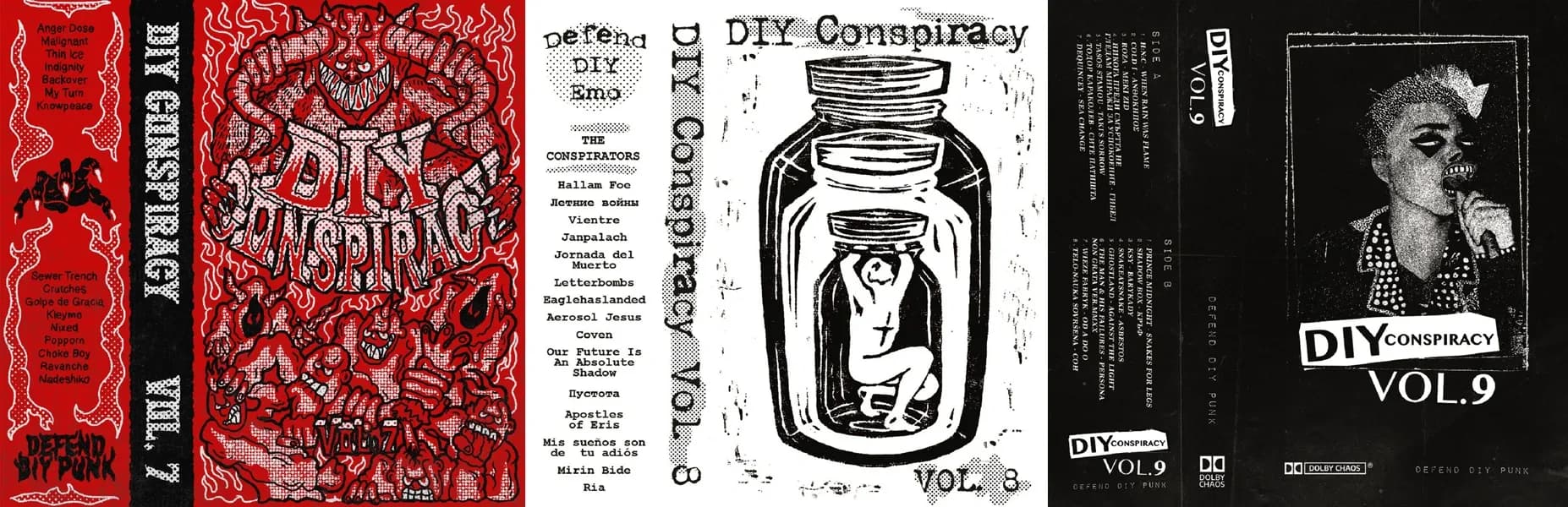
Have there been any particular projects or applications through DIY Solidarity that stayed with you or shifted how you think about DIY infrastructure and support?
GK: With regard to this, I can only speak for myself. I don’t think DIY Solidarity has shifted my thinking about DIY infrastructure and support much. The one thing I’ve been taking with me so far is: “Damn, it’s incredible how many fantastic projects there are out there!” So, if anything, it’s been a reconfirmation for the DIY spirit being alive and enchanting as ever. Yes, we have made new friends and established new contacts through the project, for sure. And if the opportunity arises, we do things together with them. Perhaps this interview can count as an example, haha.
Running both a webzine and a solidarity fund places you in a position where you’re not just documenting DIY culture but also redistributing resources within it. How do you see the relationship between cultural documentation and material support in sustaining underground scenes?
Mittens XVX: One important thing about DIY Conspiracy is that we don’t run ads on the website and don’t try to monetize it. There were times, especially during the Covid pandemic, when we struggled to pay the website expenses ourselves. I’m also personally involved in the collective of a DIY venue/social center, which is constantly struggling to survive. So I/we know how difficult it can be to keep these spaces and projects going.
We also have so many friends who are regularly fundraising for their own projects and coming up with creative ways to sustain them. Since DIY Conspiracy is close to, and somewhat knowledgeable about, the global DIY punk scene, the person who set up the DIY Solidarity fund chose our platform as the vehicle for redistributing these resources.
I think it’s partly a question of scale. You have bigger bands and initiatives raising tens or even hundreds of thousands for larger projects and campaigns (including NGOs), and there’s nothing wrong with that. But we have a smaller fund to redistribute to smaller DIY projects, often the kind that only need a couple thousand to keep going or make something happen. We’re also very clear that our focus is specifically on DIY projects from underrepresented areas, who rely solely on community support and mutual aid. No corporate, no NGO, no state funding.
Maybe speaking about this can sound like it comes from a position of privilege, but I also think there can be a blurry line between cultural documentation and just online entertainment. Being able to materially support the same scene we are trying to document feels like something worth striving for, even after the current budget runs dry.
DIY culture has changed a lot over the years, especially with social media, streaming platforms, and algorithm-driven visibility. From your perspective, what has been gained and what has been lost in that shift?
Mittens XVX: That’s a really tough question. I remember when there were constant discussions about Print vs. Online zines, and whether webzines were killing print. Now we have communities and discussions about bands like Agathocles on TikTok and Reddit, while AI generative models are being built into almost every browser and search engine.
I’m still not entirely outside of social media myself, and while I could talk for hours criticizing social media, streaming platforms, and AI, I also don’t think I fully understand everything that is happening today, or how devastating these developments may be for the world. I think Cory Doctorow’s The Reverse Centaur’s Guide to Life After AI (an upcoming book about being a better AI critic) is a really good starting point, and I’d recommend reading his books in general. He also has a new book coming soon called The Post-American Internet.
At the same time, I don’t want to pretend that everything is completely hopeless. There are still many things, and the last few years in general, that I find exciting. But there is also so much now that feels reduced to aesthetics, nostalgia, and virtue-signalling, and it can be difficult to know whether something is really an alternative. So what I think is really worth exploring are alternatives that are small-scale and self-sustainable, whether they exist offline in the real world or online through different tools and technologies. That’s the core of DIY ethics for me: small stuff works better. If you’re against monopolies and chains, you’ll want to make things work on a smaller, community level.
So yes, I think we have all suffered huge losses from the enshittification (and all the spying and surveillance that came along) of some big services and products that used to be good for their users. What has been gained is harder to define, because many of the best new things are more obscure and serve smaller communities. But that is ultimately the essence of decentralization and DIY; not one giant platform for everyone, but many smaller tools and spaces built around real needs, shared values, and direct participation.
Finally, thank you so much for taking the time to talk with us and for all the work you’ve been doing over the years. Before we wrap up, is there anything you’d like to add, anything about DIY Conspiracy, DIY Solidarity, or the wider DIY punk/hardcore world that you think is important to share with readers?
Mittens XVX: I’d like to highlight the internationalist aspect of DIY Conspiracy, and I’d love to see more people from different backgrounds, places, and scenes getting involved and writing for the site. I don’t want DIY Conspiracy to be seen as a one-person operation. Ideally, I’d like to be just one of many people contributing to it, alongside others who bring their own perspectives, local knowledge, and experiences.
And thank you for asking all these questions about DIY Solidarity. You’re actually the first media that has shown any real interest in it. I think these conversations are important, not just because of our own project, but because they point to the wider question of how DIY punk and hardcore can keep building networks of support, documentation, and solidarity.