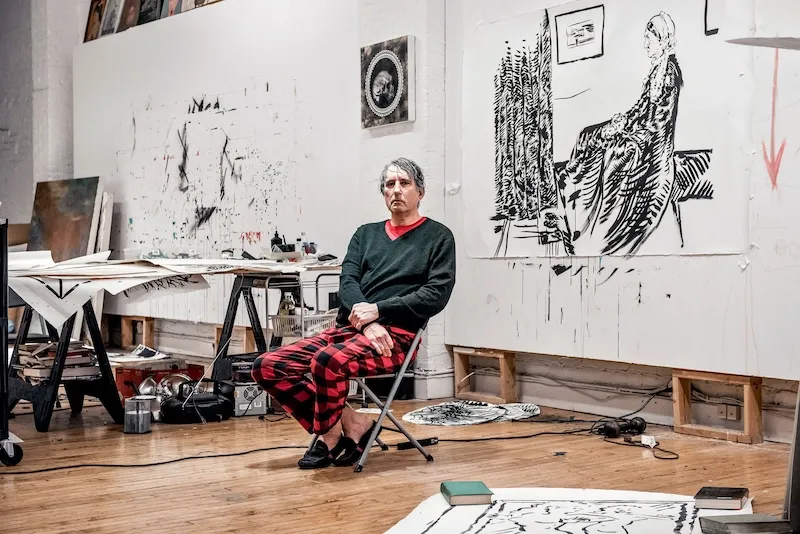

Artists shaped by punk culture have always been a source of inspiration for me. Jim Phillips, the mind behind Santa Cruz’s iconic Screaming Hand logo; Chris Shary, the hand responsible for Descendents tour posters; vigilante_88, and many others… And of course, the most uncompromising figure of this lineage: Raymond Pettibon.
1976, Hermosa Beach, California. A UCLA economics graduate, Pettibon was working as a mathematics teacher while also playing bass in a punk band called Panic, founded by his older brother. When they realized another band was already using the same name, Raymond suggested renaming the group Black Flag and designed a logo for them. This is how the now-iconic “four bars” logo came into being. Shortly after, he shifted from the band’s music side to its visual identity, designing all of their album covers, concert posters, and flyers.
Founded at an early age by his brother Greg Ginn as a company selling electronic equipment, Solid State Transmitters later changed direction and became an independent record label under the name SST Records. When no one was willing to release Panic’s records, Ginn started his own label and released their first record, Nervous Breakdown, in 1979.
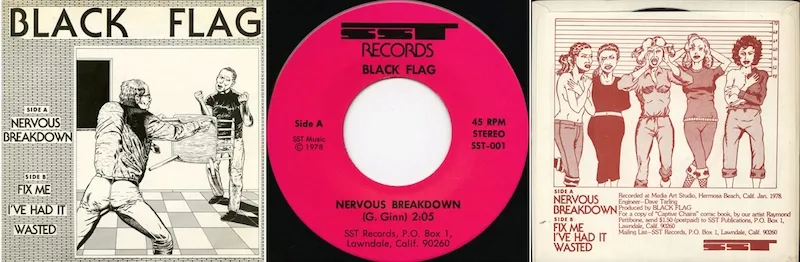
The label quickly became a cornerstone of American hardcore music, releasing albums by bands such as Black Flag, Minutemen, Saccharine Trust, Meat Puppets, Hüsker Dü, and Subhumans in its early years. Pettibon also designed album covers for bands released on SST, including Sonic Youth, Minutemen, and Saccharine Trust. Sonic Youth’s iconic album Goo was also his work.
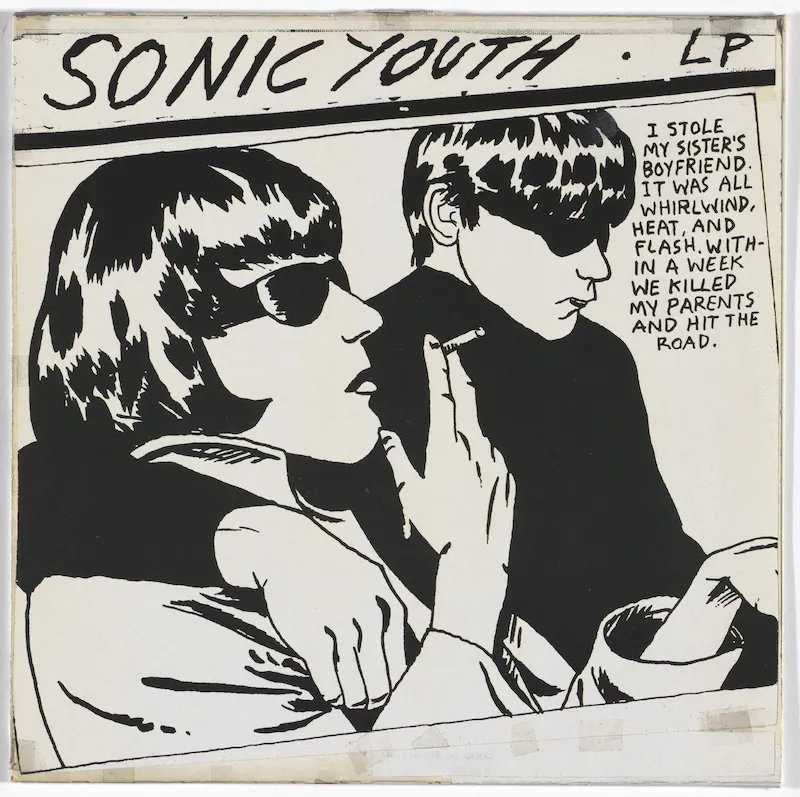
Using India ink and a comic-book-inspired aesthetic, Pettibon developed a distinct and provocative visual language. He built a style based on the tension between image and text, often deliberately mismatching the two. As a result, his work was frequently perceived as meaningless or unsettling. His critical approach blended American culture, literature, religion, dark humor, and politics. Throughout the 1980s, he published hundreds of fanzines and never regarded this work as a source of income.
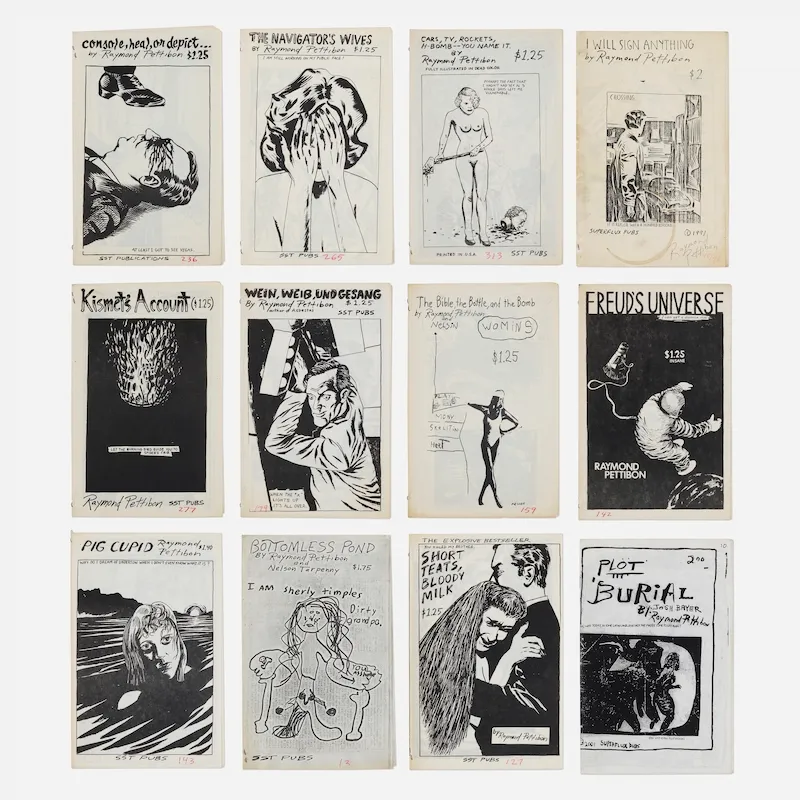
By the late 1980s, Pettibon had begun to distance himself from the punk scene and gradually emerged as a more widely recognized artist through his production. He grew dissatisfied with being confined to producing solely for the music scene and stepped out of the underground to enter the gallery world. Gaining visibility within the Los Angeles art scene, he began producing work for galleries there and held his first solo exhibition in New York in 1986.
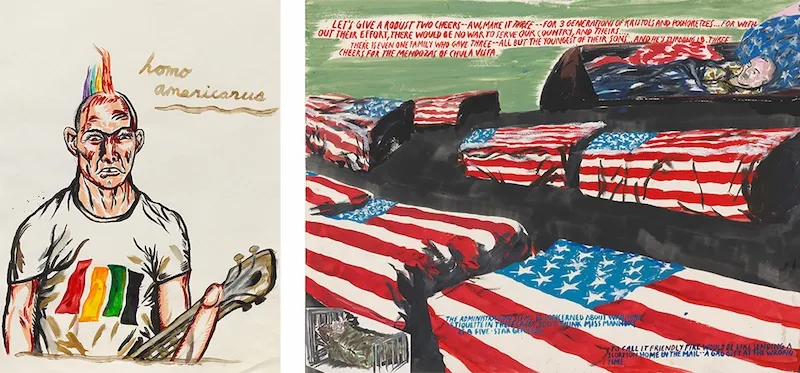
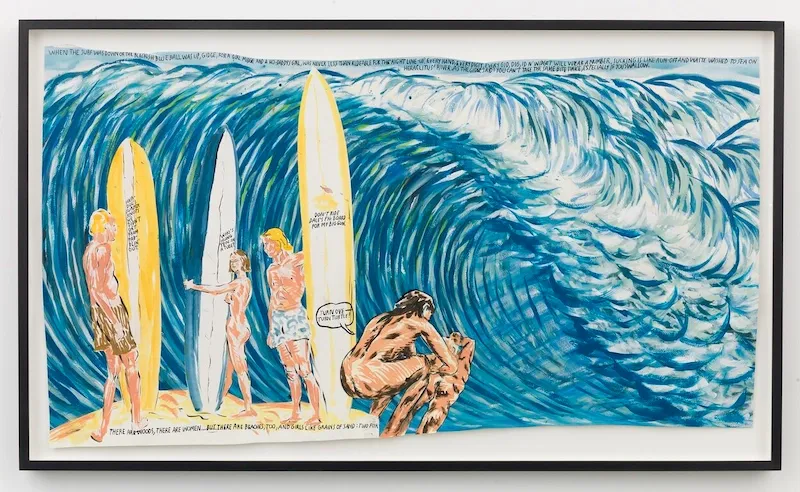
In the 1990s, he went on to participate in major contemporary art events such as Documenta IX and the Whitney Biennial. Despite this sharp transition, he never abandoned his abrasive style, instead carrying it into new contexts. The scope of his subject matter expanded further as he began approaching American culture from an anti-heroic perspective. During this period, he produced works featuring baseball players, cowboys, soldiers, surf culture, and religious figures. Quotations from William Blake, monologues taken from noir films, and altered passages from the Bible frequently accompanied his drawings. One of the most important aspects of this period is that Pettibon’s critique of America does not come from an external position; it comes from within.
From the 2000s onward, his works entered the collections of major institutions such as the Whitney Museum of American Art and the Museum of Modern Art. Through his exhibitions, he became an increasingly well-known figure. This period marked a turning point in which Pettibon ceased to be seen as a punk-rooted exception and instead became an established figure within contemporary art.
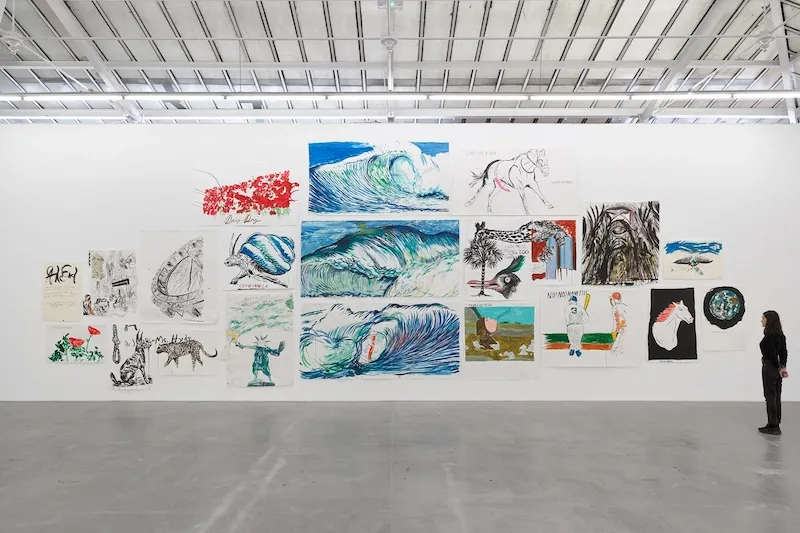
Today, despite producing works held in major museum collections and receiving the Oskar Kokoschka Prize, one of the most significant awards in contemporary art, Pettibon has never fully severed his ties with the music scene. His continued work on album covers for bands such as OFF makes it clear that he is still producing for that world.